
Most fleet managers know roughly what their vehicles cost. The purchase price, maybe the monthly fuel bill, a maintenance invoice or two. But the number they're working from is usually missing half the picture.
The real cost of a vehicle isn't what you paid for it. It's what you paid for it, fuelled it, fixed it, insured it, managed it, and sold it, added up over every kilometre it ran. That's fleet TCO. And when you actually run those numbers, a few things tend to surprise you: the vehicles you thought were cheap often aren't, the costs you thought were small often aren't, and the savings hiding in plain sight are usually bigger than expected.
This post breaks down what TCO actually includes, where fleets most commonly leak money, and what it looks like to get all of it under control.
Life Cycle Cost Analysis: Get Historical Data On The Vehicle’s Performance Before You Buy
Cheaper vehicles tend to depreciate faster, especially when they’re not right for the job. A lower sticker price with poor resale value can end up costing more over the vehicle’s life than a better-matched option would have.
Your fleet acquisition strategy matters too. Whether you lease or finance outright has significant TCO implications of its own. The sticker price is one of the least useful numbers to focus on — depreciation curves, resale value, and lifecycle costs are where the real differences show up. A big part of that comes down to which lease structure you're on: open-end and closed-end leases distribute residual value risk very differently, and that risk has a direct cost implication at the end of every term.

A life cycle cost analysis helps you:
- See the true cost of every vehicle, from purchase to sale
- Compare models on a fair, apples-to-apples basis
- Know when to sell or replace each vehicle
- Budget more accurately across your fleet
- Set maintenance schedules that reduce downtime
Getting this right takes data that most in-house teams don’t have: depreciation curves, projected resale values, and historical maintenance costs across different makes and models. At Foss we help you to compare vehicles side by side, run different scenarios, and get a clear answer instead of an educated guess.
3. Your Drivers Have More Impact on Costs Than Your Vehicles Do
The person behind the wheel often matters more than the make or model. Hard braking, harsh acceleration, speeding, and idling wear vehicles down faster and burn through fuel. Add liability claims and insurance costs, and one problem driver can cost you a lot of money. Making sure your drivers are well trained and using telematics will solve most of the driver-related problems.
4. Stop Overpaying for Fuel
Fuel waste often goes unnoticed daily, but aggregated across a fleet in the long term. Small, steady improvements yield significant fuel cost savings.
If your drivers can only fill up at one chain, they’re paying that chain’s price no matter what. A multi brand fleet card opens up the possibility to always find the best price nearby. Multiply that across your whole fleet, and the savings add up fast.
Fuel fraud is also very common, and, unfortunately, not always obvious. Two of our clients saw this firsthand:
|
MAINLAND GROUP OF COMPANIES Greater Vancouver Before working with us, Mainland had no way to check how much fuel was being bought for each vehicle. They could see a dollar total, but not whether drivers were filling beyond what the vehicle actually needed. With our fleet card, they can now match every purchase to a specific vehicle. Accurate fuel costs, visible for the first time. |
|
TIDEWATER MIDSTREAM Western Canada As a publicly traded company, Tidewater needs clean purchase records. We set dollar limits on every driver’s card, monitored purchases in real time, and flagged anything that didn’t make sense, including fills that exceeded the vehicle’s tank capacity. They get a fuel exception report within minutes of any flagged transaction. The audit trail is always clean. |
A proper fleet fuel tracking system cuts costs and stops fuel fraud. We’ve got a blog post, which covers this topic in more detail: How Fleet Fuel Tracking Cuts Costs and Stops Fuel Fraud.
5. Stay on Top of Maintenance
Thanks to maintaining the proper tire pressure, timely servicing, and the right motor oil fuel efficiency for most of our clients improves by up to 45%. Proactive maintenance programs cut overall maintenance costs by 20–30%. The challenge is keeping track of all of it across a fleet. Automated systems make sure you stay on top of the schedule.
|
MAINLAND GROUP OF COMPANIES Greater Vancouver Before Foss, Mainland drivers booked their own service, paid on a credit card, and expensed it. No schedule, no tracking, no way to know if the work was done or even necessary. Now they get preventative maintenance reminders based on real vehicle data. Our technicians review every repair recommendation before it’s approved. They push back on unnecessary work, recommend better-priced vendors, and flag vehicles that should be replaced rather than repaired. On average, we save clients like Mainland $60 per maintenance purchase order. |

7. For Some Use Cases EVs Might Be A Cheaper Option
For an increasing number of Canadians each year, electric vehicles become a viable solution for specific fleet uses. A driver covering 20,000 km annually in dense populated areas with a developed charging infrastructure can save around $2,000 in fuel by switching to an electric vehicle. EVs also cut maintenance costs: no oil changes, no fan belts, no air filters, and regenerative braking reduces wear on brakes.
Yes, they cost more upfront. But run the life cycle numbers and the total cost often looks better than the sticker price suggests. Start with a small pilot on predictable routes. The fleets that get the most out of the EV shift are the ones that aren’t caught off guard by it.
6. Look At What the Vehicle Will Be Worth When You Sell It
Many fleet managers think carefully about what a vehicle costs to buy. Fewer think about what it will be worth when they sell it. That’s real money left on the table. The right vehicle holds its value. The wrong one depreciates faster — and that gap compounds across a whole fleet.
- Buy for the full life, not the sticker price. Run the TCO model before you commit, including projected resale value at disposal.
- Recondition before you sell. Well-maintained vehicles get better prices at auction. What you spend on reconditioning usually comes back.
- Time the sale. Used vehicle markets move. We can help you sell at the right moment and get the best return.
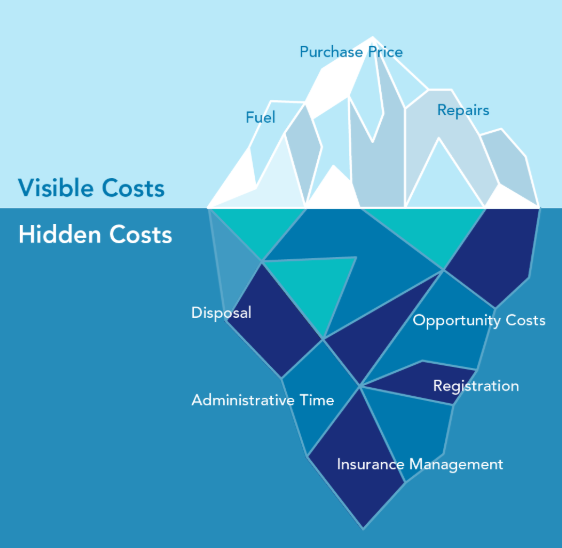
2. Account For The Hidden Costs
Think about the time your team spends managing vehicles. If a $75,000-per-year manager spends 10 hours weekly on fleet tasks, that’s nearly $40,000 annually in hidden labour costs — before you’ve touched fuel or maintenance.
Then there’s insurance shopping, claims management, registration tracking, and compliance paperwork across multiple jurisdictions. When it’s time to sell, you’re either accepting lowball trade-ins or spending weeks advertising and negotiating.
Every hour spent coordinating oil changes is an hour not spent on customers, strategic initiatives, or business development. These costs rarely appear on balance sheets, but they have a very real impact on your bottom line.
|
~$40K annual hidden labour cost for one manager (est.) |
10 hrs/wk average fleet admin time per manager |
How Working With an FMC Brings This All Together
Each of these strategies works on its own. They work a lot better when someone is managing all of them at once. That’s where we come in.
|
TIDEWATER MIDSTREAM Western Canada Tidewater came to us with a brand-new fleet and no infrastructure to manage it. Within 18 months, the fleet grew from zero to 35 vehicles. It’s now 135 units strong. Because we handle their fleet card program, invoicing, and strategic planning, they’ve never needed to hire a fleet administrator. That’s saved them approximately $30,000–$40,000 a year, consistently, since we started working together. |
If we had to do everything that Foss National does for us ourselves, I don’t even think we could do it without a huge amount of manpower.
Supervisor, TWL & TWP Divisions, Tidewater Midstream
That’s what this kind of partnership looks like: saving money and growing a fleet without needing a whole team behind it. You need to properly evaluate a fleet management company before signing up.
Here’s what we bring:
- Life cycle cost analysis, so you choose the right vehicles and know when to replace them
- Brand-agnostic vehicle recommendations with no manufacturer bias
- Fleet card infrastructure for fuel management, fraud prevention, and one clean monthly invoice
- Proactive maintenance management with technician review before costs are approved
- A nationwide maintenance network with pre-negotiated pricing
- Remarketing support to get the best price when you sell
- Telematics and safety programs that protect your vehicles, drivers, and company
Data only matters if we can use it to reduce costs, risk, or downtime. Otherwise, it’s just a lot of noise.
Basil Marcus, President, Foss National Leasing
Get to Know the Author
Basil Marcus is the president of Foss National Leasing and LeasePlan Canada. With a lifelong passion for automotive, he journeyed from business development to leading one of Canada's top fleet management companies.
Meet our team